
Table of Contents
- How to Identify Mold Free Coffee Brands in 2026
- The Role of Mycotoxin-Tested Coffee
- What Organic Mold-Free Coffee Labels Really Mean
- Low-Acid Mold-Free Coffee: Who It's For
- Whole Bean Coffee Freshness and Mold Prevention
- Roast Types, Flavor, and Mold-Free Choices
- Pricing and Value: What to Expect from Mold Free Coffee Brands
- Conclusion: Making Your Choice in 2026
- Frequently Asked Questions
Last Updated: October 12, 2026
How to Identify Mold Free Coffee Brands in 2026
Finding the best mold free coffee brands in 2026 starts with one habit: read the bag before you read the marketing.
Coffee is an agricultural product. Beans grow in humid climates, get shipped across oceans, and sit in warehouses for months before roasting. Mold and mycotoxins can develop at any point in that chain, which is why serious roasters test rather than assume.
Below, we'll walk through how to separate real testing from marketing language, what organic labels actually guarantee, and how to judge freshness, roast type, and price per cup.
Third-Party Testing and Lab Reports
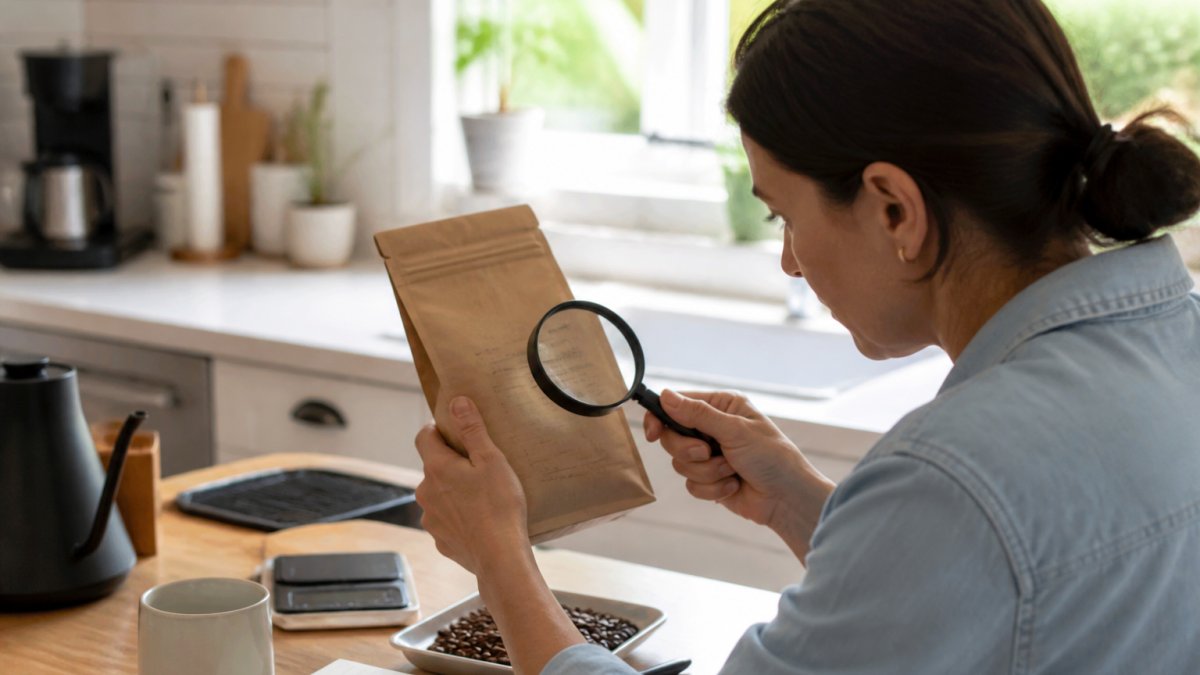
Third-party testing means an independent laboratory, not the roaster's own staff, screens a coffee sample for contaminants. For mold-free coffee, the relevant tests look for mold, yeast, mycotoxins, and sometimes heavy metals.
Mycotoxins are toxic compounds produced by certain molds, most notably ochratoxin A in coffee. The key distinction most guides skip: mold and mycotoxins are not the same thing. A green coffee sample can show mold presence while mycotoxin levels remain below detection limits, and vice versa.
When you evaluate a brand, ask three questions:
- Which laboratory performs the testing?
- What does the report actually measure, and at what detection limits?
- Can you see a current report, not a generic certificate from years ago?
Detection limits matter. The U.S. Food and Drug Administration food safety guidance outlines how contaminant testing and food safety standards apply to products like coffee.
Why 'Mold-Free' Isn't a Regulated Term
No U.S. regulator defines or enforces the phrase "mold-free." It is a marketing claim, not a certification. That means two brands can use the same words while meaning completely different things: one may run batch-level mycotoxin screening, another may simply state that its coffee is handled cleanly.
This is the single biggest trap in this category. A bag that says "mold-free" without a lab report is asking you to take its word. A bag that says "tested for mycotoxins, mold, yeast, and heavy metals" and links to results is showing its work.
Treat "mold-free" as a claim to verify, not a guarantee to trust. The verification is the product.
The Role of Mycotoxin-Tested Coffee
Mycotoxin-tested coffee is coffee that has been screened by a laboratory for toxic mold byproducts, primarily ochratoxin A. Testing is the only way to know what's in a batch, because mycotoxins are invisible, odorless, and unaffected by roasting at normal temperatures.
Here's what testing does and does not prove. It proves a specific sample from a specific lot fell below the lab's detection threshold at the time of testing. It does not prove every future batch will match, which is why ongoing, batch-level testing beats a one-time certificate.
A common mistake is assuming dark roasting "burns off" contaminants. It doesn't reliably do that. The better defense is sourcing from importers who control moisture and storage, then verifying with lab screening.
What Organic Mold-Free Coffee Labels Really Mean
Organic mold-free coffee combines two separate claims: USDA Organic certification and mold-related testing. They are not the same guarantee, and conflating them is where buyers get misled.
USDA Organic is a regulated certification covering how coffee is grown and processed, including restrictions on synthetic pesticides and fertilizers. It says nothing directly about mold or mycotoxin content.
What organic certification does offer is a cleaner starting point: fewer pesticide residues and a documented supply chain. For buyers concerned about contaminants broadly, organic plus third-party mycotoxin testing is a stronger combination than either alone.
What most labels miss is the storage story. Ask how the green coffee was dried, shipped, and warehoused. Those steps, more than the organic seal, determine whether mold gets a chance to grow.
Low-Acid Mold-Free Coffee: Who It's For
Low-acid mold-free coffee suits two groups: people with sensitive stomachs and people managing reflux or general digestive discomfort. Acidity in coffee comes from compounds in the bean and from the roast profile, and lower-acid options reduce that trigger.
A practical note on roast level: darker roasts tend to taste less acidic, though the relationship is more nuanced than most guides suggest.
Who doesn't need it? If you drink coffee without discomfort, low-acid options mainly change flavor, often toward heavier, less bright cups. There's no health penalty for choosing them, but there's no requirement either.
The overlap that matters: a coffee can be low-acid and tested for contaminants at the same time. You don't have to trade one concern for the other.
Whole Bean Coffee Freshness and Mold Prevention
Whole bean coffee freshness is your best practical defense against stale, compromised coffee. Mold needs moisture and time. Freshly roasted beans shipped quickly minimize both windows.
Buy whole bean when you can. Ground coffee exposes far more surface area to oxygen and humidity, which accelerates staling and gives any latent moisture problem a head start. Grinding right before brewing preserves aroma and flavor, and it keeps the bean's natural protection intact longer.
Storage rules that actually matter:
- Keep beans in an airtight container, away from light and heat
- Skip the refrigerator; moisture swings work against you
- Buy in quantities you'll finish within a few weeks
- Check the roast date, not the "best by" date
Roast date transparency is the tell. A brand that prints the roast date on every bag is telling you exactly how fresh your coffee is. A brand that only prints a best-by date is hiding the number that matters most.
Roast Types, Flavor, and Mold-Free Choices
Roast type shapes flavor far more than it shapes contamination risk. Light roasts keep more origin character: brighter, fruitier, more acidic. Medium roasts balance sweetness and body. Dark roasts push toward chocolate, caramel, and smoke, with less perceived acidity.
If you're choosing among mold-free options, pick the roast you'll actually enjoy drinking daily. A tested coffee you love beats a tested coffee you tolerate.
For espresso, medium and medium-dark roasts tend to pull balanced shots with enough body to stand up to milk. For pour-over and drip, light and medium roasts let origin flavors come through. French press rewards a slightly coarser grind and a medium-dark roast.
The practical takeaway: roast level is a flavor decision, and testing is a safety decision. Make them separately.
Pricing and Value: What to Expect from Mold Free Coffee Brands
Price in this category reflects testing, sourcing, and freshness, not just the beans. Expect to pay more than grocery-aisle coffee, because lab screening and small-batch roasting add real cost per bag. But "more expensive" is not the same as "better value," and the only honest way to compare is price per cup.
How to Calculate Price Per Cup
The math is simple, and most brands hope you never do it:
- Find the net weight on the bag (usually 12 oz or 16 oz).
- Estimate cups per bag. A standard coffee dose is about 0.36 oz (roughly 10 grams) per 6-oz cup. That works out to roughly 33 cups per 12-oz bag and about 44 cups per 16-oz bag.
- Divide the bag price by the cup count.
A $20 12-oz bag yields about 33 cups, or roughly $0.61 per cup. A $30 16-oz bag yields about 44 cups, or roughly $0.68 per cup. The cheaper-looking bag is not always the cheaper cup, and the premium bag is not always the pricier one once you account for how many servings you actually get.
What You Are Actually Paying For
| Cost Driver | Why It Adds to the Price | What to Verify |
|---|---|---|
| Third-party lab testing | Independent screening per lot or batch, plus confirmatory methods when needed | Named lab, method, detection limit, current report |
| Small-batch roasting | Lower volume, tighter quality control, more labor per pound | Roast date printed on the bag |
| Fast shipping after roast | Fresher coffee, less warehouse time, higher logistics cost | Stated ship window from roast date |
| Traceable sourcing | Importers who control moisture and storage at origin | Origin details and storage practices |
| Organic certification (if applicable) | USDA Organic compliance, inspection, and recordkeeping | Valid certificate and certifier name |
Each line item is a real cost. The question is whether the brand passes that cost through as verifiable evidence or as a marketing story.
A Realistic Price Range
Mold-free and mycotoxin-tested coffees generally land in a range above commodity grocery coffee and roughly in line with specialty single-origin pricing. At the lower end, you may find tested blends in the mid-teens per 12-oz bag. At the higher end, single-origin, small-batch, batch-tested coffees can run into the high twenties or low thirties per bag. The spread reflects testing frequency, sourcing traceability, roast volume, and shipping speed, not just bean quality.
What matters is not the sticker price but whether the price is justified by documentation you can check. A $28 bag with a current lot-specific report, a printed roast date, and a stated ship window is a different product from a $28 bag with a "mold-free" logo and nothing behind it.
Value Per Serving, Not Per Bag
Judge value by price per cup at consistent quality, not by bag price. A premium bag that yields more cups and stays fresh longer can cost less per serving than a cheaper bag you replace more often because it staled before you finished it. Freshness is part of value: stale coffee gets thrown out, and thrown-out coffee has an infinite price per cup.
A simple comparison method:
- Calculate price per cup for each candidate.
- Note the roast date and expected freshness window.
- Check whether testing documentation is current and lot-specific.
- Weigh the difference in cents per cup against the difference in verifiable evidence.
At ARDITO Coffee Roasters, our Coffee Gift Set, Pick Any 3 lets you compare roast levels side by side before committing to a full-size routine. It's $50 for three bags, roasted in small batches, with the roast date printed on every bag and orders shipping within days of roasting.

Conclusion: Making Your Choice in 2026
The best mold free coffee brands in 2026 share three traits: they test with independent labs, they print roast dates, and they ship fast. Everything else, from organic seals to roast names, is secondary to those fundamentals.
Start with transparency. Ask for lab reports. Check the roast date. Buy whole bean when you can, and store it properly. Those habits will do more for your cup than any single label claim.
That's the standard we hold ourselves to at ARDITO Coffee Roasters. Every batch is third-party tested for mycotoxins, mold, yeast, and heavy metals, roasted in small batches, and shipped within days of roasting with the roast date on the bag.
FIND YOUR ROAST
Frequently Asked Questions
What coffee doesn't have mold?
No coffee is guaranteed mold-free, but brands that invest in third-party testing for mycotoxins and mold provide verified results. Look for companies that publish lab reports and use airtight packaging. Small-batch roasters like ARDITO Coffee Roasters test for mold, yeast, and heavy metals, and print roast dates on every bag. Proper storage at home also prevents mold growth after purchase.
How can you tell whether a coffee brand tests for mold or mycotoxins?
Check the brand's website for a dedicated testing page or lab reports. Reputable brands name the accredited laboratory and specify which contaminants they screen for, such as ochratoxin A or aflatoxins. If a brand makes vague claims without documentation, treat it with caution. You can also contact customer service and ask for a certificate of analysis for a recent batch.
Are organic coffee brands less likely to contain mold?
Organic certification focuses on farming practices, like avoiding synthetic pesticides, but it does not guarantee mold-free coffee. Mold and mycotoxins can develop during storage or shipping regardless of organic status. A USDA Organic label is a good starting point, but third-party contaminant testing is a stronger indicator of mold safety. Combine both for the best assurance.
Does roasting remove mold or mycotoxins from coffee?
Roasting can reduce mold and mycotoxin levels, but it does not eliminate them entirely. Some mycotoxins, like ochratoxin A, are heat-stable and can survive the roasting process. That's why prevention, from sourcing to storage, matters more than relying on roasting alone. Choosing a brand that tests its beans gives you the most reliable picture of what's in your cup.